


Best Basement Moisture Prevention Methods
A basement rarely becomes damp because of one dramatic failure. More often, water follows a predictable path: roof runoff lands too close to the foundation, soil slopes toward the house, humidity condenses on cool surfaces, or a small crack admits moisture during heavy rain. The best basement moisture prevention methods address that full path, starting outside the home and working inward.
For buyers and homeowners, the goal is not simply to hide a musty smell or run a dehumidifier after a storm. It is to identify why moisture is present, protect the foundation and finished areas, and avoid the costly repairs that can follow prolonged dampness.
Start with water management outside the foundation
The most effective basement protection is usually found above ground. Rain and snowmelt should be collected, directed, and discharged well away from the foundation. When that system fails, water saturates the soil beside the basement wall and increases the pressure pushing against it.
Keep gutters, downspouts, and extensions working
Clogged gutters can overflow directly beside the foundation. Downspouts that terminate at the wall can do nearly the same thing, even when the gutters themselves are clean. Inspect gutters in spring and fall, and after major storms if your property is surrounded by mature trees.
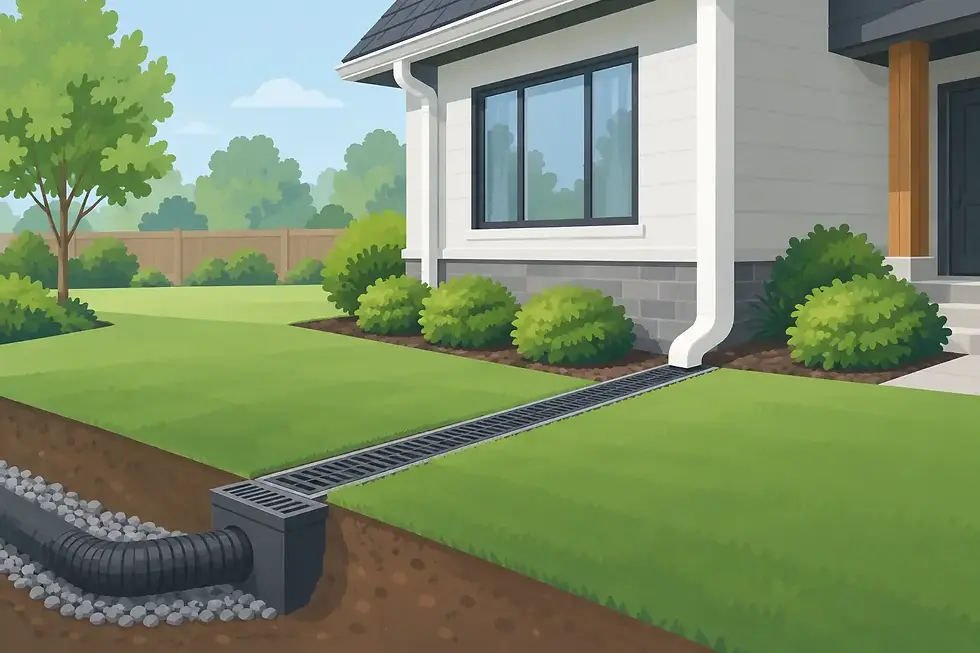
Downspout extensions should carry water away from the house onto a surface that continues to drain away. The right distance depends on the site, grading, walkways, and neighboring properties, but the principle is consistent: discharged water should not return to the foundation. Avoid routing water where it can freeze across a walkway, collect near a neighboring structure, or drain back toward the home.
Correct grading where the ground slopes inward
Soil around the house should slope away from the foundation. A low spot next to the wall can act like a basin, holding rainwater and snowmelt exactly where it can do the most harm. This concern is common after landscaping work, patio installation, settling soil, or the removal of old shrubs.
Adding soil may appear simple, but it must be done carefully. Do not bury siding, cover masonry weep openings, or raise soil against vulnerable wood components. A qualified professional can help determine whether regrading is appropriate or whether a more extensive drainage solution is needed.
Understand the best basement moisture prevention methods by source
Moisture clues matter because each source requires a different repair. A stain that develops after a wind-driven storm points to a different issue than droplets forming on cold water pipes in summer. Treating every problem as a foundation leak can lead to unnecessary work and missed defects.
Water entering at the base of a wall or through floor cracks may indicate saturated soil, poor exterior drainage, a compromised foundation crack, or a drainage system that is not performing as intended. Water near a basement window may come from an overflowing or poorly drained window well. Dampness concentrated around plumbing, meanwhile, may be caused by an active leak, condensation, or an appliance discharge issue.
Watch for recurring odors, peeling finishes, rust on metal components, white mineral deposits on masonry, swollen baseboards, staining, or a dehumidifier that fills unusually quickly. These signs do not confirm the cause on their own, but they justify closer investigation before refinishing or purchasing a property.
Protect window wells and below-grade openings
Basement windows, exterior stairwells, and utility penetrations create unavoidable weak points below grade. They need special attention because surface water naturally seeks low areas.
Window wells should be clear of leaves, debris, and accumulated soil. Their drains, where provided, must remain functional. A clear cover can reduce the amount of rain and snow entering a well, but it is not a substitute for drainage. If water collects in the well after rain, determine where it should drain rather than relying on a cover alone.
Inspect the seal around utility entries, such as pipes, cables, and conduits. Aging caulk or gaps around penetrations can allow moisture and air movement. Small repairs completed early are generally easier than addressing water-damaged insulation, finishes, or framing later.
Use dehumidification for humidity, not for bulk water
A dehumidifier is valuable in many basements, particularly during humid weather. It can reduce condensation, help control musty odors, and protect stored belongings. It cannot correct water flowing through a wall, a leaking pipe, or a drainage failure outside.
Place the unit where air can circulate and maintain it according to the manufacturer’s instructions. If possible, arrange a reliable continuous drain rather than depending on a collection bucket that can fill while you are away. Keep basement windows closed during humid periods unless outdoor conditions are genuinely drier than the air indoors.
A hygrometer provides a useful reality check. Many homes benefit from maintaining basement relative humidity at roughly 30% to 50%, though the appropriate range can vary with outdoor temperature and building conditions. Very dry air can create its own comfort and material concerns in winter, so the objective is controlled humidity, not the lowest possible reading.
Insulate cold surfaces and manage condensation
Condensation occurs when warm, moisture-laden air meets a surface that is below the dew point. In basements, common locations include cold-water pipes, metal ducts, rim joists, concrete walls, and windows. The water may look like a leak, but the repair is often related to insulation, air sealing, ventilation, or indoor humidity control.
Insulating cold-water pipes can reduce dripping condensation. Addressing air leakage and properly insulating rim-joist areas can also improve comfort and limit moisture accumulation. These details are especially relevant in climates with significant seasonal temperature changes.
Be cautious with finished basement walls. Covering a damp foundation wall with framing and drywall can trap moisture where it cannot be seen. Before finishing or renovating, confirm that exterior drainage is working, visible cracks have been evaluated, and the wall is dry under typical conditions. Materials and wall assemblies should be selected for below-grade use rather than treated like a standard above-grade room.
Maintain drainage systems and sump equipment
Some homes rely on perimeter drains, interior drainage channels, sump pits, or sump pumps to manage groundwater. These systems deserve routine checks because they often remain out of sight until a heavy rain exposes a problem.
If your home has a sump pump, test it periodically by carefully adding water to the pit until the float activates. Confirm that the pump starts, discharges water properly, and stops as expected. The discharge line must direct water away from the foundation and should not be blocked, frozen, or connected in a way that returns water to the basement drainage system.
A battery backup can provide added protection where power outages often coincide with severe weather. It is not necessary for every property, but it is worth considering when the basement contains finished living space, stored valuables, or critical mechanical equipment. Perimeter drain repairs are more involved and may require a drainage specialist, particularly where repeated water entry, slow drainage, or evidence of hydrostatic pressure is present.
Repair cracks with the right level of urgency
Not every foundation crack is an emergency, and not every repair requires excavation. Hairline cracks can result from normal concrete shrinkage, while wider, displaced, horizontal, or actively leaking cracks can require prompt professional assessment. The pattern, location, movement, and presence of water are more informative than crack width alone.
A surface sealant may be appropriate for a minor, dry condition, but it will not reliably solve a crack that is moving or subjected to ongoing exterior water pressure. Similarly, interior waterproof coatings may improve appearance but should not replace correction of poor grading, roof runoff, or drainage defects.
If a crack is accompanied by wall bowing, offset masonry, recurring leakage, or doors and windows above that are suddenly difficult to operate, seek further evaluation. These conditions may involve structural or soil-related concerns beyond ordinary maintenance.
Build moisture checks into seasonal maintenance
Basement moisture prevention is most effective when it becomes part of normal home care. In spring, inspect for damage after snowmelt and freeze-thaw cycles. Before rainy seasons, clear gutters, test the sump pump, and check downspout extensions. During humid months, monitor humidity and look for condensation on pipes or windows. In fall, remove leaves from gutters and window wells before they block drainage.
For a home purchase, a careful inspection should include visible foundation conditions, drainage clues, basement finishes, plumbing, humidity indicators, and signs of prior water entry. At APARinc Home Inspections, these findings are documented clearly so clients can understand whether an issue is a maintenance item, a repair priority, or a reason for further investigation.
A dry basement protects more than storage boxes and finished flooring. It supports indoor air quality, preserves building materials, and gives homeowners clearer control over one of the most persistent risks to a property. When you notice a change, investigate the water path early, before a manageable maintenance concern becomes hidden damage.


Comments