

Exterior Drainage Solutions That Protect Your Home
A damp basement rarely begins in the basement. In many homes, the source is rainwater or melting snow that is not being directed safely away from the structure. Effective exterior drainage solutions protect the foundation, reduce moisture pressure at below-grade walls, and help prevent a manageable maintenance issue from becoming a costly repair.
For buyers, drainage conditions can reveal whether a property has been maintained with the building envelope in mind. For homeowners and sellers, correcting obvious water-management concerns can reduce risk before a heavy rainstorm, spring thaw, or inspection. The right solution depends on the property’s grading, roof layout, soil conditions, foundation type, and existing signs of water entry.
Why Exterior Drainage Matters at the Foundation
A foundation is designed to support a house, not to withstand standing water indefinitely. When water collects beside exterior walls, it can saturate the soil and create hydrostatic pressure against the foundation. Over time, that pressure may contribute to seepage through cracks, joints, window openings, or service penetrations.
Water near the foundation can also worsen existing defects. A small crack that remains dry may be a maintenance item. That same crack, exposed to repeated wetting and freezing, can become a route for moisture intrusion. In cold climates, freeze-thaw cycles can move soil, damage hardscape, and enlarge vulnerable openings around the home.
Visible interior symptoms are often delayed. Staining at the lower portion of a wall, peeling paint, musty odors, efflorescence, damaged flooring, and elevated humidity can all indicate that moisture has affected the building. However, a drainage concern may exist outside long before these signs appear indoors.
The Exterior Drainage Solutions That Matter Most
Positive grading keeps surface water moving
The ground around the house should generally slope away from the foundation so water naturally drains outward. A practical target is a noticeable drop in grade within the first several feet from the wall, while still accounting for patios, walkways, driveways, window wells, and neighboring properties.
Negative grading occurs when soil, mulch, landscaping, or paving directs water toward the house. This is common after years of settlement, landscape changes, or the installation of new hard surfaces. Even a modest low area beside the foundation can hold water after rainfall.
Regrading may involve adding and compacting appropriate fill soil, then restoring the surface with topsoil and landscaping materials. The repair should not cover siding, brick weep openings, vents, or other intended drainage details. Raising soil too high can create a different moisture and pest-entry concern, so the relationship between the finished grade and exterior cladding must be carefully maintained.
Gutters and downspouts manage roof runoff
A roof sheds a significant volume of water during a storm. Gutters collect that runoff, and downspouts are responsible for carrying it away from the house. If either component is blocked, damaged, poorly sloped, or missing, water can spill directly beside the foundation.
Downspout extensions are among the simplest exterior drainage improvements, but their placement matters. They should discharge well away from the foundation and avoid sending water toward a neighbor’s property, a driveway that may ice over, or a slope that leads back to the home. Flexible extensions can be useful, although they may shift, crack, or be damaged by lawn equipment. Buried solid piping can provide a cleaner appearance when it is properly sloped, protected from blockage, and discharged to an appropriate location.
During an inspection, look beyond whether gutters are present. Overflow marks, loose fasteners, sagging sections, deteriorated joints, and missing splash control can indicate that the system is not performing as intended.
Swales, drains, and catch basins address larger flows
Some sites need more than basic regrading and downspout extensions. A swale is a shallow, graded channel that guides surface water around or away from a building. It can be effective where broad areas of a yard drain toward the home or where runoff enters from an uphill property.
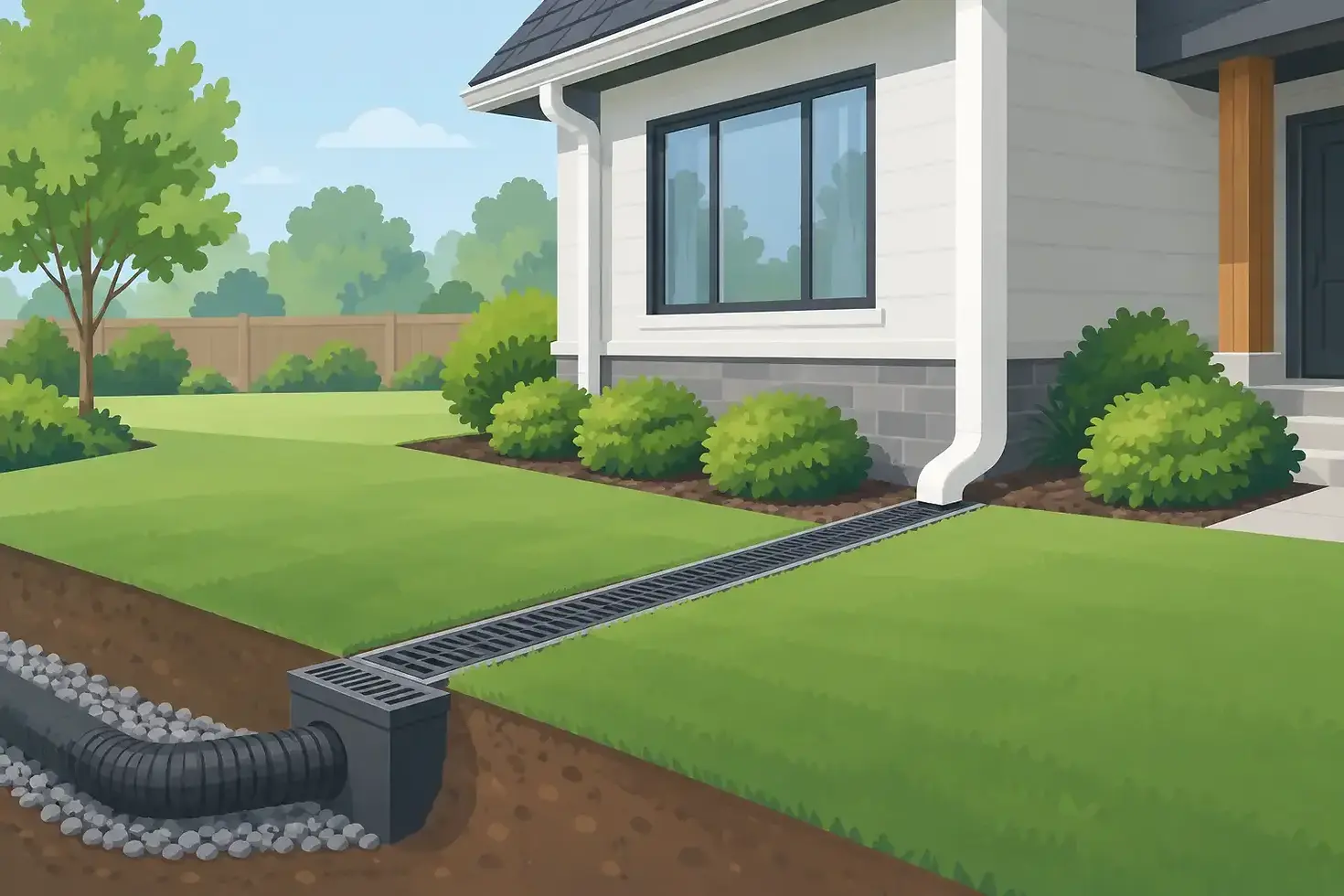
Area drains and catch basins collect water at low points, such as the base of exterior stairs, near patios, or in depressed landscape areas. These systems require regular cleaning. Leaves, sediment, mulch, and ice can block an inlet quickly, leaving water with nowhere to go during a storm.
French drains can also be appropriate in certain conditions. Typically, they use perforated pipe surrounded by drainage stone to intercept groundwater or disperse surface water below grade. They are not a universal fix. If the pipe lacks proper slope, the outlet is poorly planned, or fine soil enters the system, it may clog or hold water rather than relieve it. A drainage contractor should assess soil conditions and the intended discharge point before installation.
Window wells and exterior openings need attention
Below-grade windows, basement stairwells, utility penetrations, and exterior doors are common weak points when drainage is poor. Window wells should have functioning drains where required, covers that do not trap water, and surrounding grading that directs runoff away from the opening.
A window-well drain connected to the footing drain or another approved drainage route may be concealed, which makes its condition difficult to confirm visually. If water stands in a well after rain, the cause could be blocked drainage, poor grading, a damaged cover, or excessive roof runoff. The condition deserves further investigation before water reaches the window frame or foundation opening.
Start With the Simplest Cause
When basement moisture is present, it is tempting to focus immediately on interior waterproof coatings or expensive excavation. Those measures may be necessary in some cases, but they should not replace a careful review of exterior water sources.
Start by observing the property during or shortly after rainfall. Note where water flows from the roof, where it ponds, whether soil is settled beside the foundation, and whether paved surfaces slope toward the house. Review downspout discharge points and check low areas around decks, stairs, patios, and landscaping borders.
The source is not always obvious. Water can travel underground from a leaking downspout connection, a broken buried drain line, or an uphill area of the site. It can also enter through a roof or wall defect and appear at a lower interior location, creating the impression of a foundation leak. A diagnosis should consider the full building exterior rather than relying on one symptom alone.
When Repair Requires a Specialist
Routine maintenance, such as cleaning gutters or adding a properly placed extension, may be appropriate for many homeowners. More complex conditions should be assessed by a qualified drainage, foundation, or landscaping professional. These include recurring basement water entry, large cracks with displacement, persistent standing water, damaged foundation drainage systems, or extensive excavation needs.
Excavation around a foundation can be disruptive and costly. It may involve removing landscaping, patios, walkways, decks, or portions of a driveway. For that reason, it is worth confirming the diagnosis before approving major work. A written scope should explain where water is coming from, how it will be redirected, what materials will be used, and how the repaired area will be restored.
For buyers, drainage observations should be weighed alongside the condition of the roof, exterior cladding, foundation walls, attic, plumbing, and interior finishes. A home inspection can identify visible evidence of drainage deficiencies and moisture-related concerns, while also documenting conditions that may warrant further evaluation. APARinc Home Inspections uses a detailed visual assessment and clear photographic reporting to help clients understand what was observed and what should happen next.
Maintenance Protects the Repair
Exterior drainage is not a one-time project. Soil settles, leaves accumulate, extensions shift, and landscaping changes over time. Check gutters and downspouts seasonally, particularly after leaf fall and before periods of heavy rain. Inspect the ground around the home after winter and after major storms, when settlement and new ponding patterns are easiest to see.
Avoid piling mulch, firewood, snow, or garden materials against the structure. Keep visible drainage inlets clear, and make sure discharge locations remain open. If a previously dry basement develops a damp odor or visible staining, investigate promptly rather than waiting for the next storm to confirm the issue.
A dry foundation begins with water being given a clear path away from the house. Careful observation, practical maintenance, and timely professional advice can protect both the structure and the confidence behind your property decision.


Comments